The viral claim points to a real issue, but blends outdated numbers with unconfirmed talk of overseas hiring
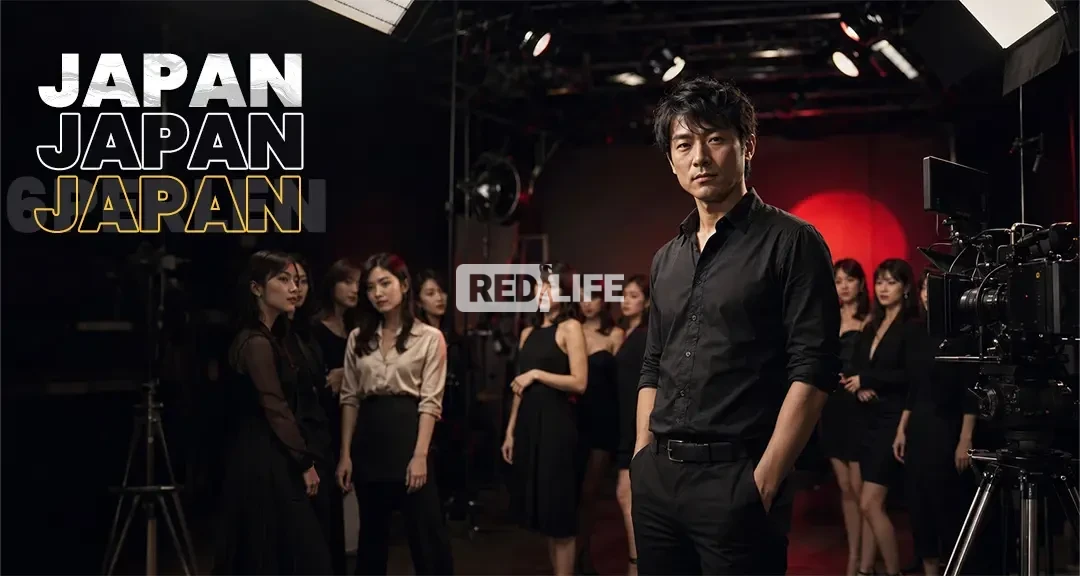
Over the past few months, a surprising narrative has resurfaced on social platforms: in Japan’s large
adult film industry, there are reportedly so few male performers compared with thousands of female porn actresses that studios are now recruiting from abroad. At first glance, it reads like a new and unusual labour shortage, but the reality is more layered.
The small pool of male
porn performers has long been recognised within Japan’s AV sector. However, many of the numbers being shared online are
not recent statistics, and the claim about current foreign hiring lacks solid, up‑to‑date evidence. That does not make the subject any less important:
it clearly illustrates how specific labour, social and regulatory factors shape adult content production behind the scenes.
Where did the famed 70 men to 10,000 women figure originate?
The widely cited ratio entered global media in
2015. At that time, Shimiken—one of Japan’s most prominent male performers—stated that roughly seventy regularly working men served approximately ten thousand female performers. A director later clarified in contemporary coverage that the “seventy” mainly referred to dependable, frequently hired men consistently available for larger shoots.
This detail matters. The number
did not come from an official nationwide registry, but from an industry estimate describing the active, trusted core. Likewise, ten thousand women did not necessarily mean ten thousand full‑time, simultaneously active performers. On the female side, many enter and exit quickly, whereas on the male side a smaller, seasoned group is repeatedly booked.
So the story did not start in 2026. An old estimate has been repackaged on social media with fresh visuals and wording, making it easy to mistake for a newly emerging crisis.
The shortage isn’t just an old internet myth
Exact headcounts still cannot be confirmed from public data, but later industry remarks indicate that the male talent pipeline remains persistently limited. In 2024, the head of an agency representing Japanese male performers openly called for new applicants, and coverage at the time again referenced an active pool below one hundred.
This does not mean the entire Japanese adult industry is close to breaking point. Rather, it shows that many productions
depend on a very small number of proven, dependable professionals. If one of them becomes unavailable, falls ill, or retires, finding an immediate, suitable replacement is not always feasible.
Performing on camera is not a fantasy scenario, but a tightly run production role with significant responsibilities.
Why aren’t more men lining up to apply?
From the outside, many might imagine the job to be easy or unusual work. On a professional
porn shoot, however, the performer’s personal experience is not the priority; the focus is on meeting the production’s technical and commercial requirements.
A male performer must deliver reliably through long shooting days in front of a crew and multiple cameras. He must follow the director’s direction, accommodate camera angles, lighting, continuity, his partner’s boundaries, and the overall shooting plan. This demands physical endurance, mental focus, punctuality, clear communication, and regular health screening.
Beyond professional suitability, social stigma remains a major barrier to entry. A publicly identifiable performer must consider that his work may affect future employment, housing, banking, and private life. Content published online may remain searchable long after leaving the field.
Moreover, the pay for male performers does not always offset these long-term risks. The situation of established stars and regularly booked professionals is not comparable to that of newcomers. An uncertain workload, strict availability expectations, and high attrition together explain why producers can truly rely on only a narrow group.
Are companies really seeking male talent overseas?
This cannot be answered with a simple yes. In 2017, a news item claimed that a Japan‑affiliated production company planned a male casting in Malaysia and had previously auditioned in Singapore. Even then, however, reports indicated that the details and actual execution were not fully verifiable.
This one‑off, nearly decade‑old account does not prove that Japan’s industry is currently engaged in broad international recruiting. The circulating post does not name a production company, casting, official application page, or date. The assertion that “they are now turning abroad” therefore reads more like a
click‑driven social media inference than a verified, current development.
In any case, working abroad requires far more than an online announcement. One must verify the production company’s credibility, contract terms, usage rights, employment and residency conditions, age verification, health protocols, the right to withdraw consent, and applicable local laws. Without these, a viral post cannot be treated as a legitimate job offer.
The 2022 legal changes in Japan reshaped how the entire market operates
In 2022, Japan enacted a specific law to protect AV performers. The goal was to reduce harm caused by coercion, deceptive contracts, and abuse. Among other provisions, the law requires cooling‑off periods between signing and filming, and between filming and release, allows contract termination under certain conditions without penalty, and enables requests to suspend distribution.
While the need for safeguards is not disputed, day‑to‑day compliance has significantly increased paperwork for studios, agencies, and performers. According to a 2025 industry report from Japan, the time and effort tied to contracting multiplied. Performers, content, and shoot dates must be locked in earlier, which makes last‑minute replacements or quick onboarding of new talent more difficult.
This environment both strengthens performers’ legal protections and raises the value of those who are experienced, vetted, and consistently reliable. The limited pool of male performers is therefore not only a headcount issue, but also a challenge of scheduling and risk management.
So what part of the viral post holds up?
It is accurate that Japan’s adult industry has long faced a shortage of consistently employable professional male performers. It is also plausible that the thin pipeline still causes problems for certain shoots today. However, the oft‑repeated figure of seventy is a 2015 estimate, not fresh, official data.
There is likewise no sufficient evidence that, in 2026, the entire Japanese industry launched organised international recruitment. There have been isolated reports of overseas castings, but they do not justify concluding there is a broad, current trend.
The real takeaway is less sensational but more professionally relevant: adult content production also includes hard‑to‑staff, high‑requirement roles in which a seemingly exceptional opportunity carries substantial physical, psychological, legal, and reputational risks.
The RED-LIFE team’s view
On RED-LIFE’s advertising pages, we believe it is essential not to discuss
adult jobs based on internet myths or unverifiable promises. An overseas offer that looks appealing can only be responsibly evaluated when the client, legal framework, contract, precise scope of work, and safety measures are clear.
This Japanese case shows how quickly an old industry estimate can be repackaged into social media content that resembles breaking news. Eye‑catching claims are not a problem in themselves, but before publishing, it is always necessary to distinguish verified facts, professional estimates, and not‑yet‑confirmed conclusions.





























![[LEGUAN] Adult job in Switzerland](/_upload/article/1080x576/le/leguan-1080x576-eng-29.webp)

![[ELITE Studio] A busy, luxurious](/_upload/article/1080x576/el/elitebasel-1080x576-eng-17.webp)



![[Club Casanova XL] in Hannover](/_upload/article/1080x576/ca/casanova-1080x576-eng-9.webp)






![[CHALET] Austria’s busiest private house](/_upload/article/1080x576/ch/chalet-1080x576_en-1.webp)

![[Elite Massage] Swiss private studio](/_upload/article/1080x576/el/elitemassage-1080x576-en-2.webp)










 in numbers (statistics 1 month - 3 months -1 year)


